
Cottonwood Heights Foundation Pros
Foundation Repair for Cottonwood Heights, UT Homeowners
Cottonwood Heights Foundation Pros handles foundation repair for Cottonwood Heights, UT homeowners on bench-grade lots with aging settlement issues. Free estimates.
- 15+ Years local experience
- 500+ Projects completed
- Licensed & Insured
Serving Cottonwood Heights and nearby communities.
Cottonwood Heights sits on the east bench of the Salt Lake Valley, south of Holladay and Murray, north of Sandy, east of Midvale. That grade matters. Water and soil behave differently on a slope than they do on flat valley floor, and a lot of foundations here are starting to show it.
The city only incorporated in January 2005, after years as an unincorporated part of the county. That history matters more than it sounds like it should. A good chunk of the housing stock went up before there was a dedicated city building department reviewing foundation work.
County rules at the time weren’t necessarily lighter, but enforcement and inspection records from that era are thinner than what newer cities have on file. Decades later, those same foundations are the ones calling us about diagonal cracks, bowing basement walls, or a floor that’s started to slope toward one corner.
Cottonwood Heights Foundation Pros works this bench corridor specifically. We’re not guessing at what causes movement here, we’re looking at the same slope-driven settlement and soil behavior on every job in this area.
Serving homeowners in Cottonwood Heights
This is a built-out, established community, not a new subdivision. The 2020 census put the population at roughly 33,600, and most of the lots were developed decades ago. That means the work we see is overwhelmingly repair and stabilization on mature foundations, not new-construction support for homes still settling into fresh fill.
Two things show up again and again on bench-grade properties here:
Spring runoff. Snowmelt coming down from the canyons east of the city raises groundwater and adds hydrostatic pressure against basement walls. Older poured or block foundation walls that have been fine for years can start bowing inward once that seasonal pressure builds, especially if the original drainage around the foundation has degraded or clogged over time.
Grade and soil shift. Bench-area lots aren’t flat. Clay and sand layers common to this part of the valley expand and contract with moisture swings, and on a sloped lot that movement doesn’t happen evenly across the footprint. One side of the house settles faster than the other, which is why diagonal cracks and uneven door frames tend to show up on one corner before the rest of the structure.
We also serve the surrounding bench corridor, Holladay, Murray, Sandy, and nearby Draper, since the same geography and soil conditions carry across city lines. If you’re near the edge of Cottonwood Heights, we’re still the right call.
Foundation Repair FAQs for Cottonwood Heights homeowners
How do I tell if my house is on expansive clay soil?
Look for cracks that widen and narrow with the seasons, doors that stick in summer but swing free in winter, or cracking that follows a diagonal line from a window or door corner. Expansive clay swells when wet and shrinks when dry, and that cycle shows up as repeating, seasonal movement rather than a single one-time crack.
What causes sinking patios and sidewalks on bench-grade lots?
Concrete slabs poured on sloped or loosely compacted fill tend to settle unevenly as the soil beneath consolidates or washes out. On a bench lot, water runoff running downhill accelerates that soil loss under a slab edge, which is why you’ll often see one corner of a patio or sidewalk sink faster than the rest.
Why does my basement wall bow after heavy spring runoff?
Snowmelt from the canyons saturates the soil around the foundation faster than it can drain. That saturated soil pushes against the wall with more force than the wall was built to resist long-term, and over repeated spring cycles the wall bows inward a little more each year until it needs bracing or anchoring.
Do older homes here face different code requirements for foundation work?
Structural repairs like underpinning or wall stabilization typically need a permit regardless of when the home was built, since the work affects load-bearing elements. Homes built before 2005 incorporation were permitted under county rules at the time, but any new structural work today goes through current Salt Lake County and city permitting. Worth confirming your specific scope with the city before work starts.
Request a free estimate in Cottonwood Heights
If you’re seeing a crack that’s widening, a basement wall that’s bowing after this year’s runoff, or a patio slab that’s sunk at one corner, we can take a look. Call Cottonwood Heights Foundation Pros at +1 (435) 334-4917 or request a free estimate through Contact. We can also walk through the full offer list on Home if you’re not sure which service fits your situation yet.
What we do
Services in Cottonwood Heights
Foundation Repair across Cottonwood Heights and the surrounding area.
Residential Services
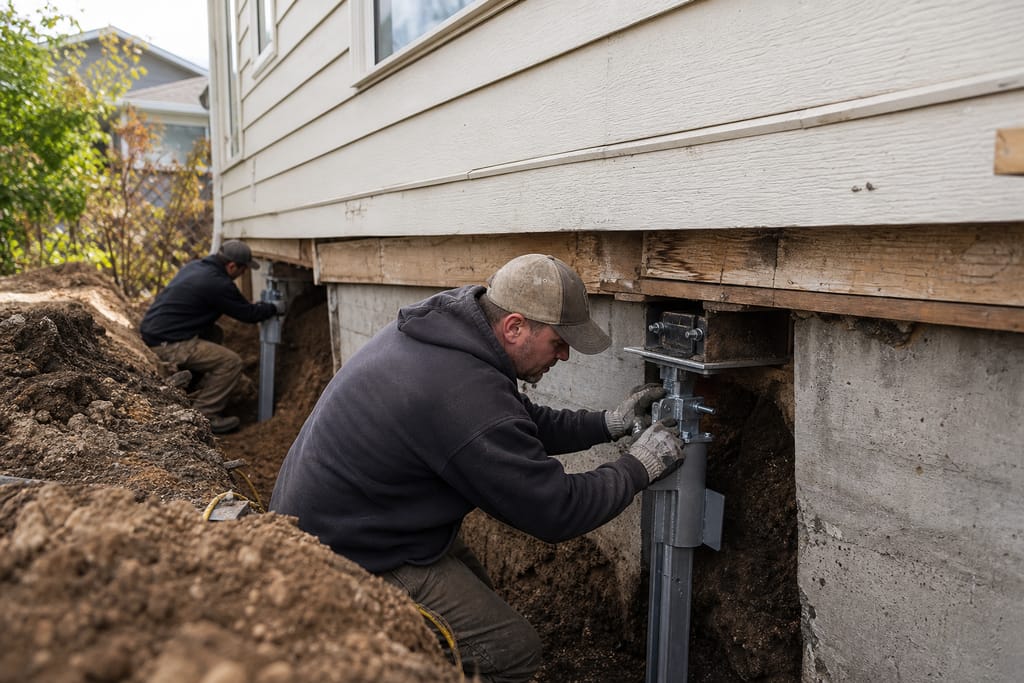
Foundation Repair
Foundation Repair serving Cottonwood Heights and nearby cities.
Learn more →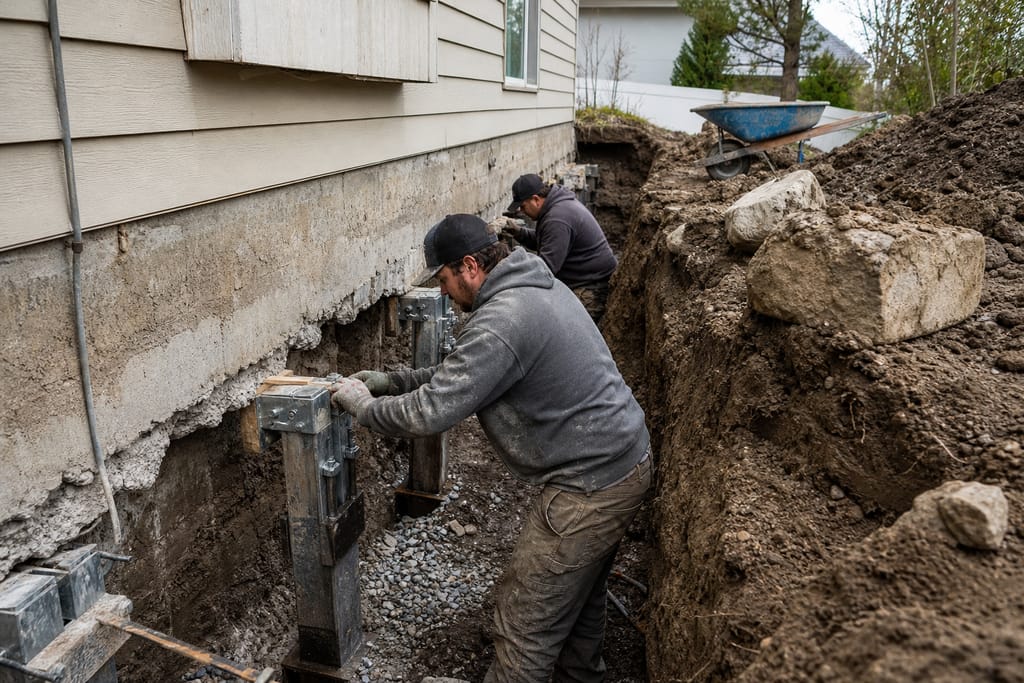
Piering and Underpinning
Piering and Underpinning serving Cottonwood Heights and nearby cities.
Learn more →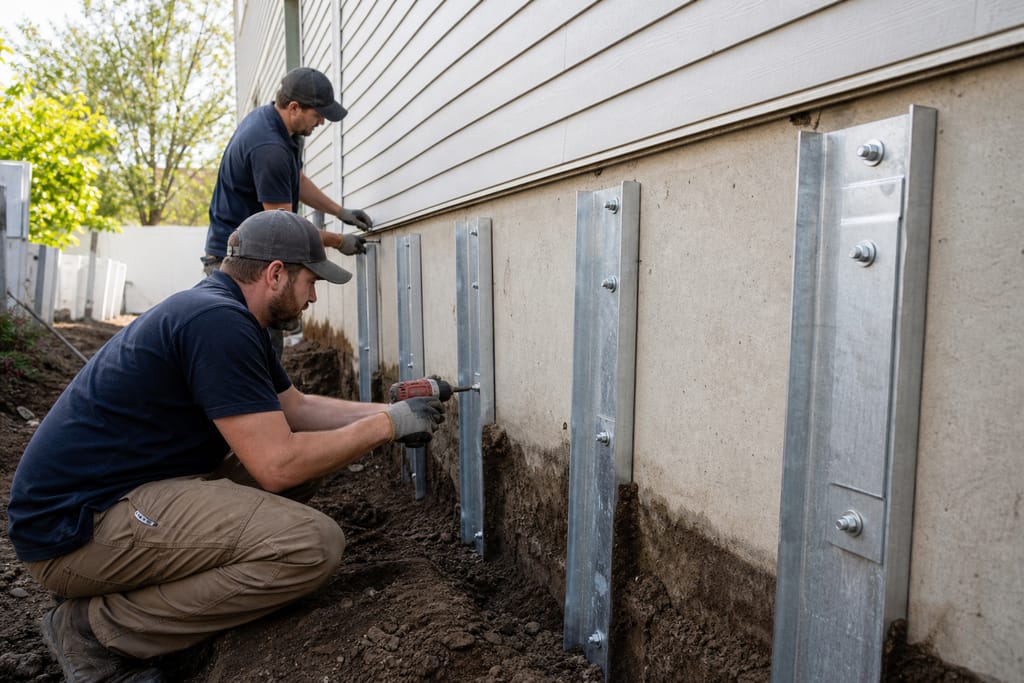
Wall Stabilization
Wall Stabilization serving Cottonwood Heights and nearby cities.
Learn more →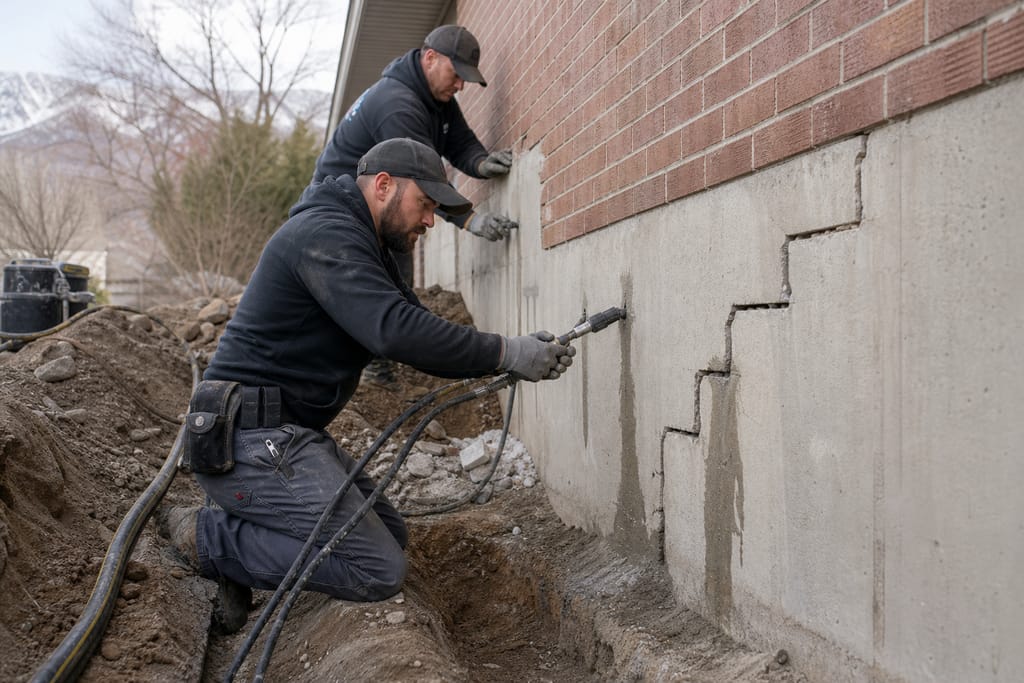
Foundation Crack Repair
Foundation Crack Repair serving Cottonwood Heights and nearby cities.
Learn more →
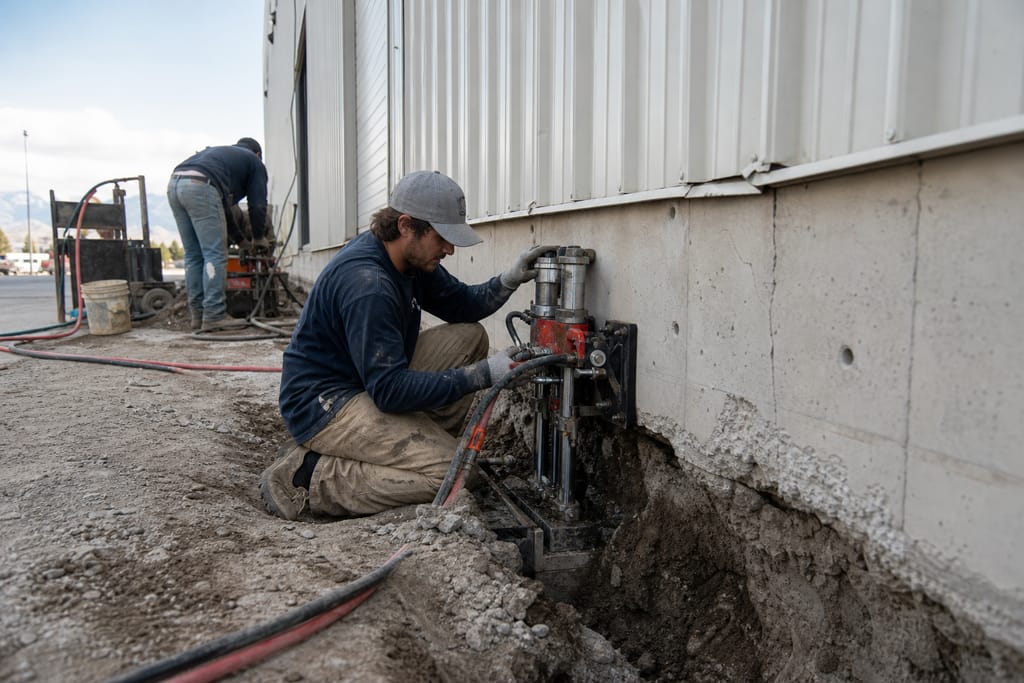
Get an estimate in Cottonwood Heights
Tell us about the project and how to reach you.