Cottonwood Heights Foundation Pros
Wall Stabilization in Cottonwood Heights, UT
Bowing basement wall stabilization in Cottonwood Heights, UT using wall anchors and carbon fiber straps. Free estimates, written scope.
- 15+ Years local experience
- 500+ Projects completed
- Licensed & Insured
Serving Cottonwood Heights and nearby communities.
A basement wall that bows inward isn't a cosmetic problem, it's soil pressure winning against concrete, and it tends to show up worst right after spring snowmelt pushes extra hydrostatic pressure from the canyons down through bench-area soil. Cottonwood Heights Foundation Pros stabilizes bowing or leaning walls with anchors, carbon fiber straps, or steel bracing matched to how far the wall has moved and how much pressure is still building against it.
What's included
What's included with Wall Stabilization
Typically included: wall measurement for bow and crack pattern, selection of anchor or strap system, installation, and tensioning or bracing to arrest movement. Optional: epoxy crack sealing on cracks found during inspection, interior drainage tie-in if moisture is part of the pressure problem. Customer prep: clear storage and furniture from along the affected wall before the crew arrives.
Want a clearer scope?
Get a Free EstimateHow it works
How our Wall Stabilization process works
 Step 1
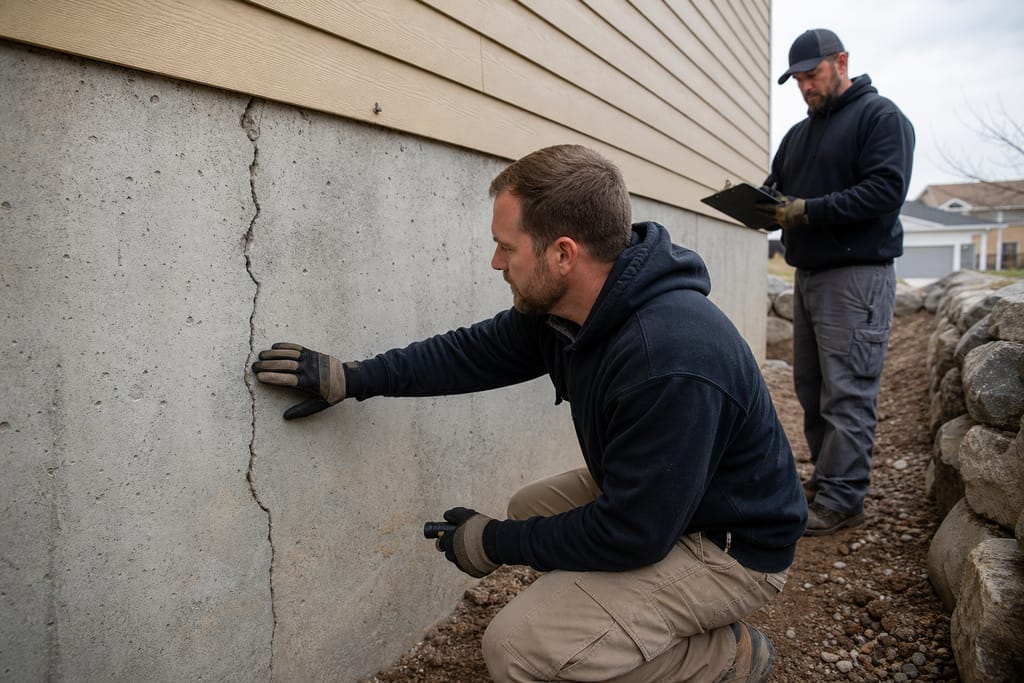
Wall Inspection
Walls are checked for bowing, cracking, or leaning indicators.
 Step 2
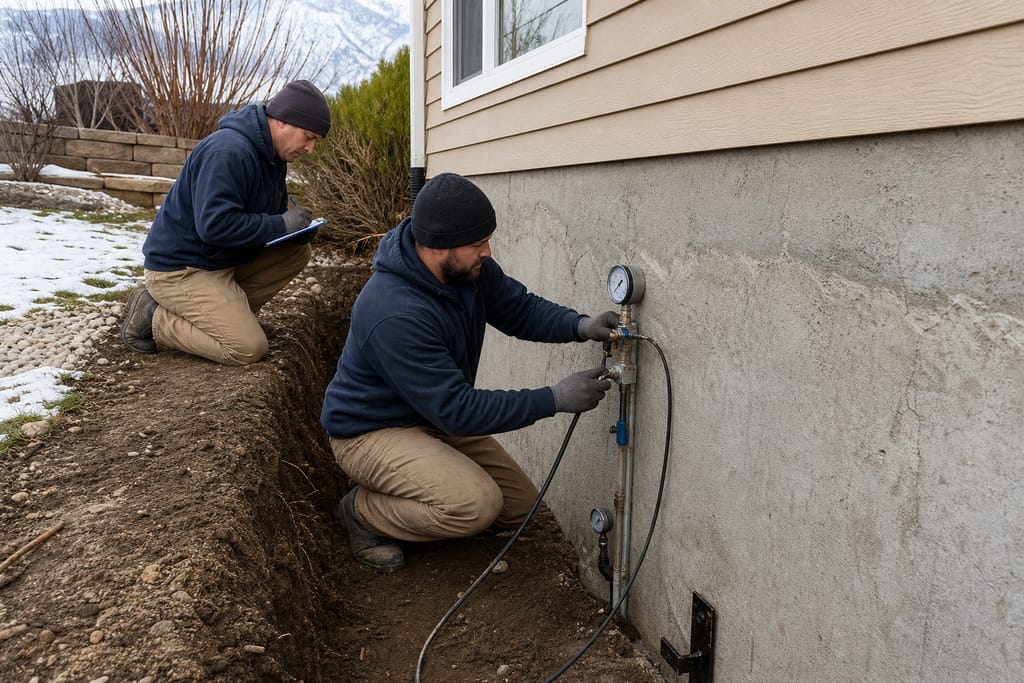
Pressure Assessment
Soil and hydrostatic pressure behind the wall are evaluated.
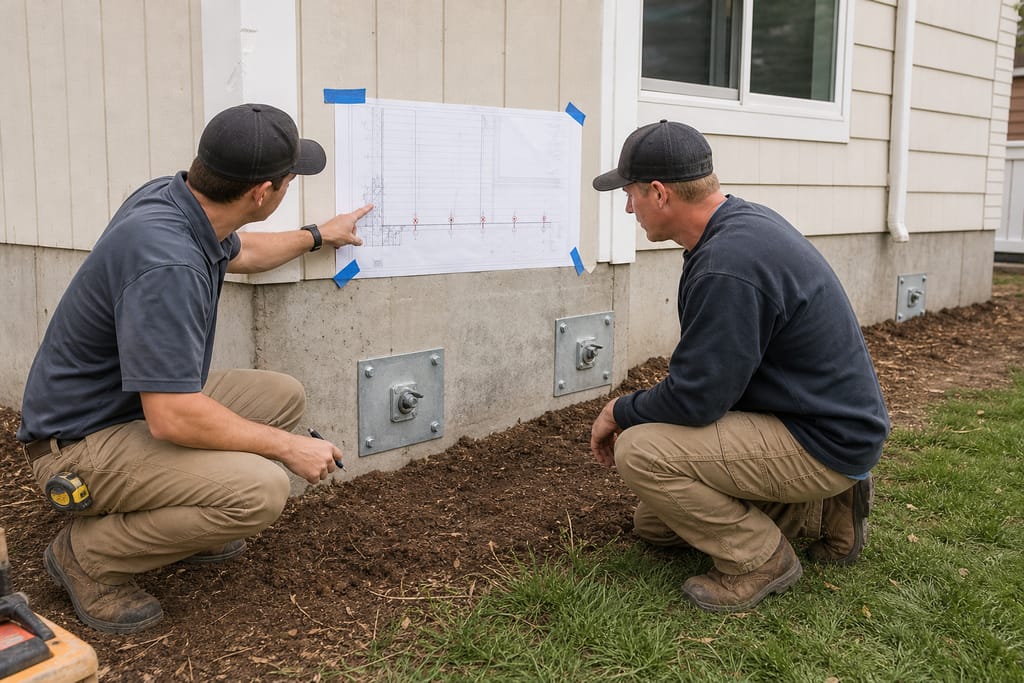 Step 3
Reinforcement Planning
An anchor, strap, or bracing method is chosen based on severity.
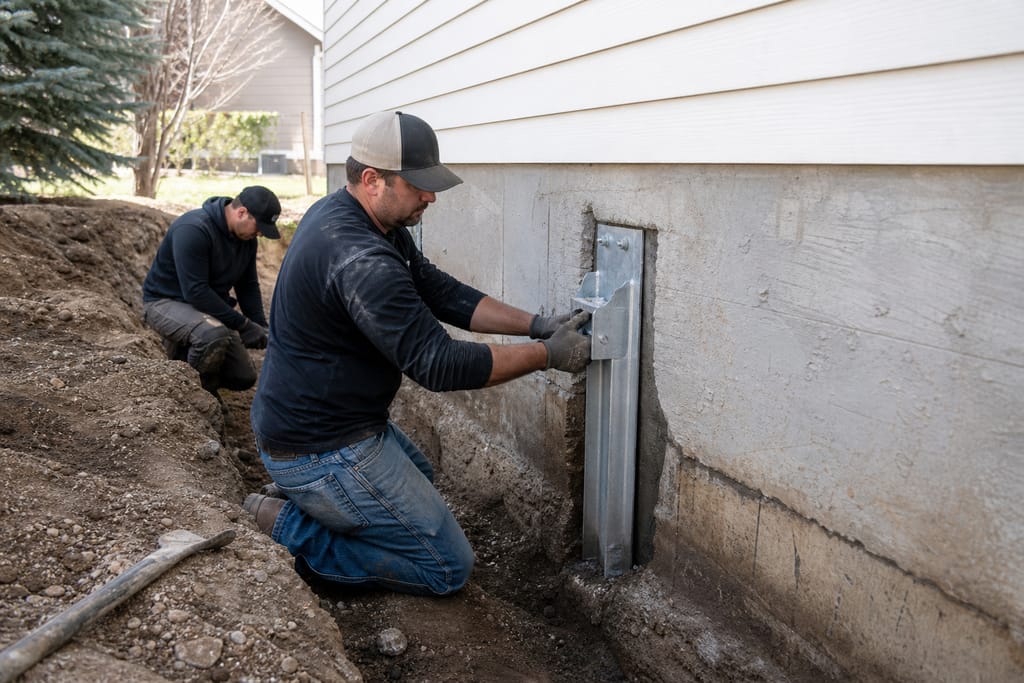 Step 4
Anchor Or Brace Installation
Support systems go in to stop further wall movement.
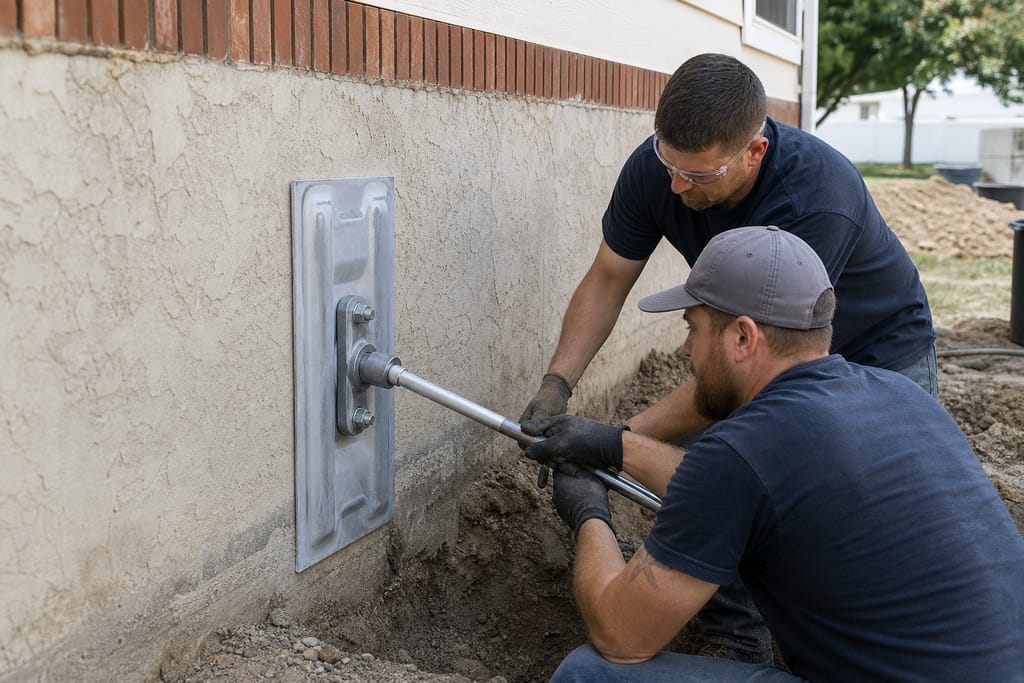 Step 5
Tensioning Adjustment
Anchors or braces are tightened to gradually stabilize the wall.
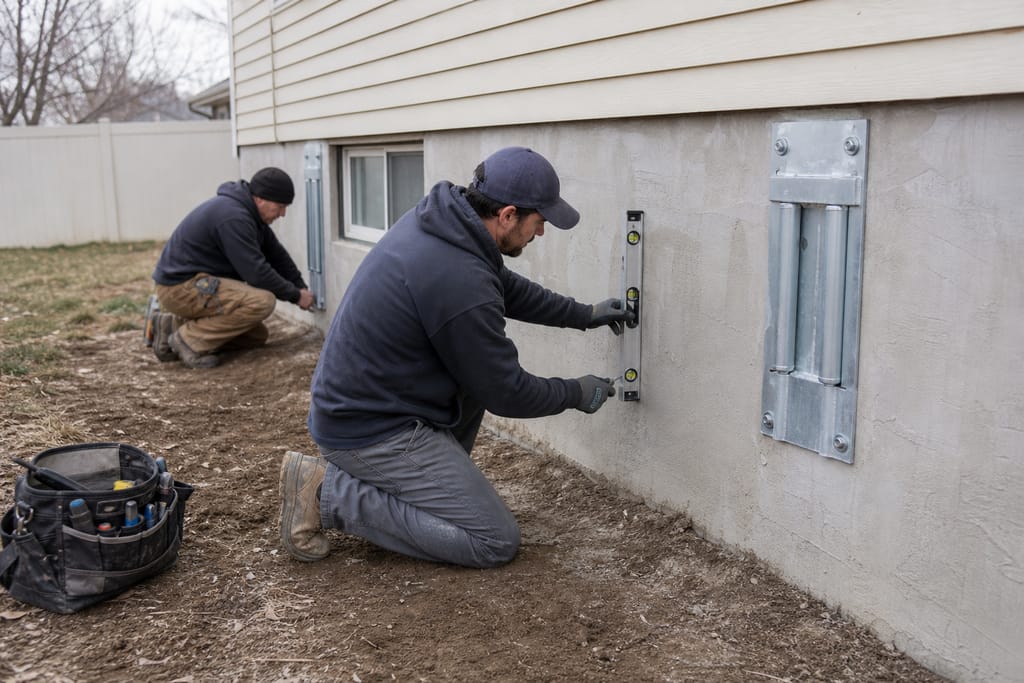 Step 6
Final Inspection
The wall is rechecked to confirm it's holding and properly installed.
Materials
Materials and methods for Wall Stabilization
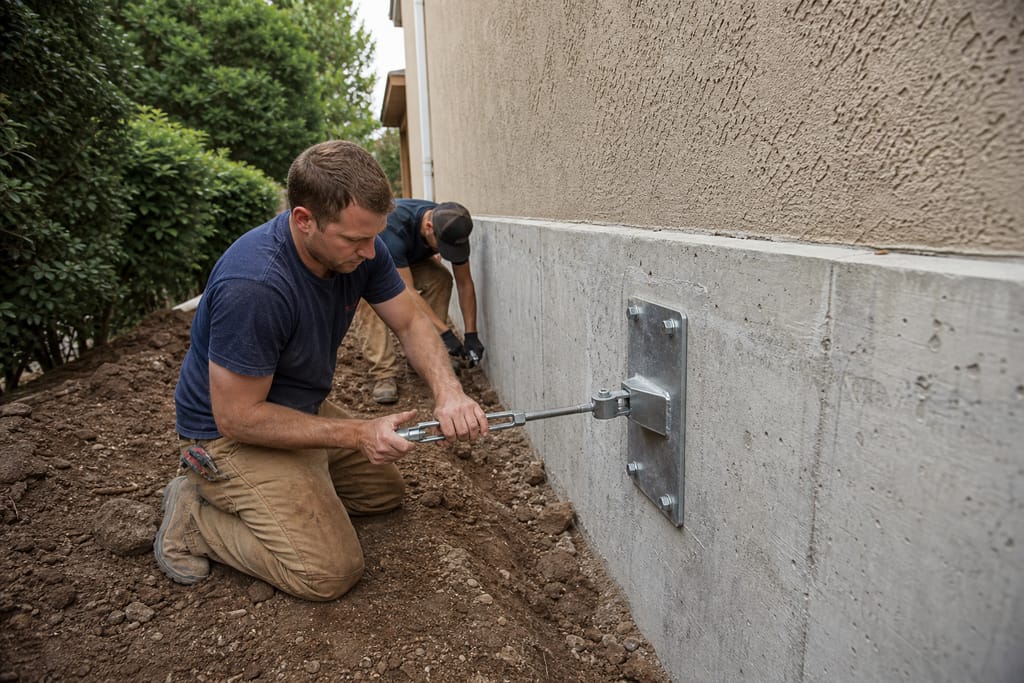
Wall Anchors
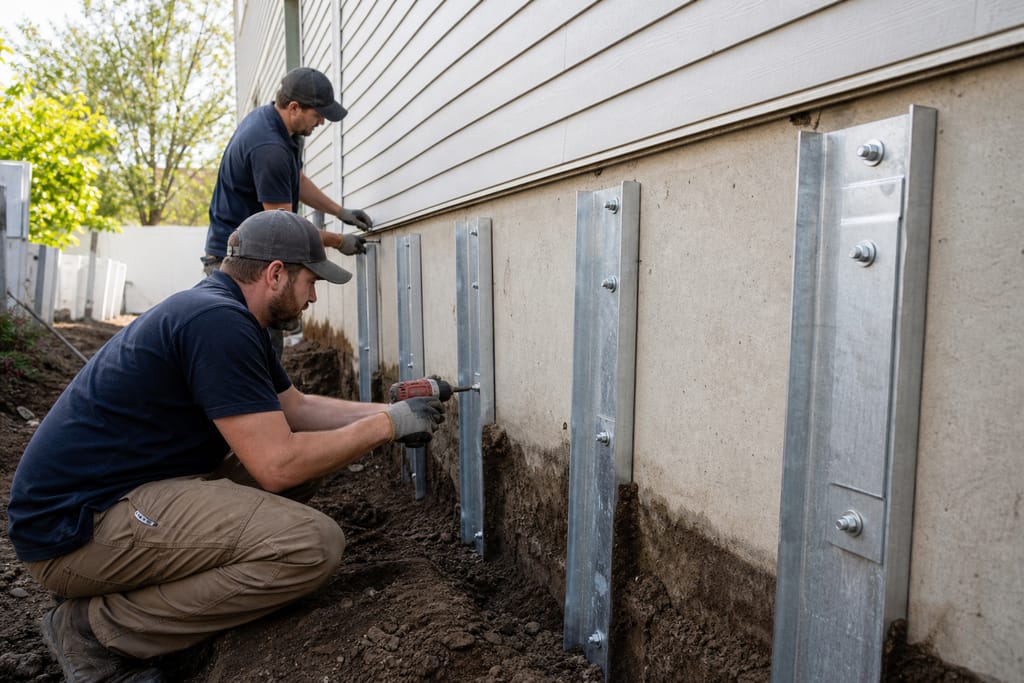
set in the yard soil to pull against inward wall pressure, a common fix where there's room to excavate outside.
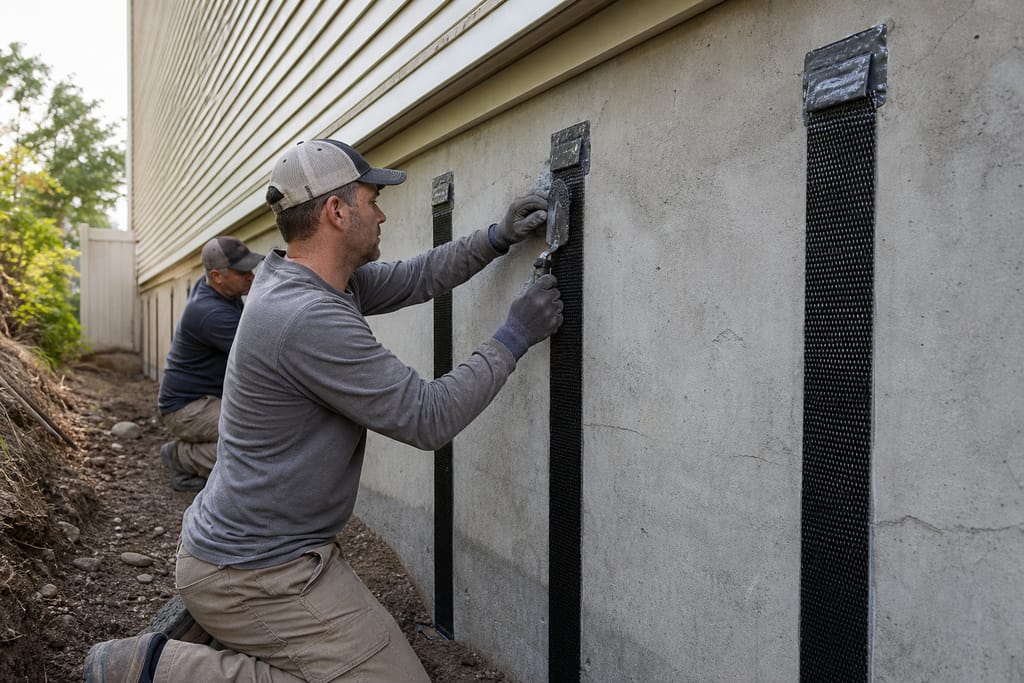
Carbon Fiber Straps
bonded directly to the wall face when yard access is limited, holding the wall without digging up landscaping.
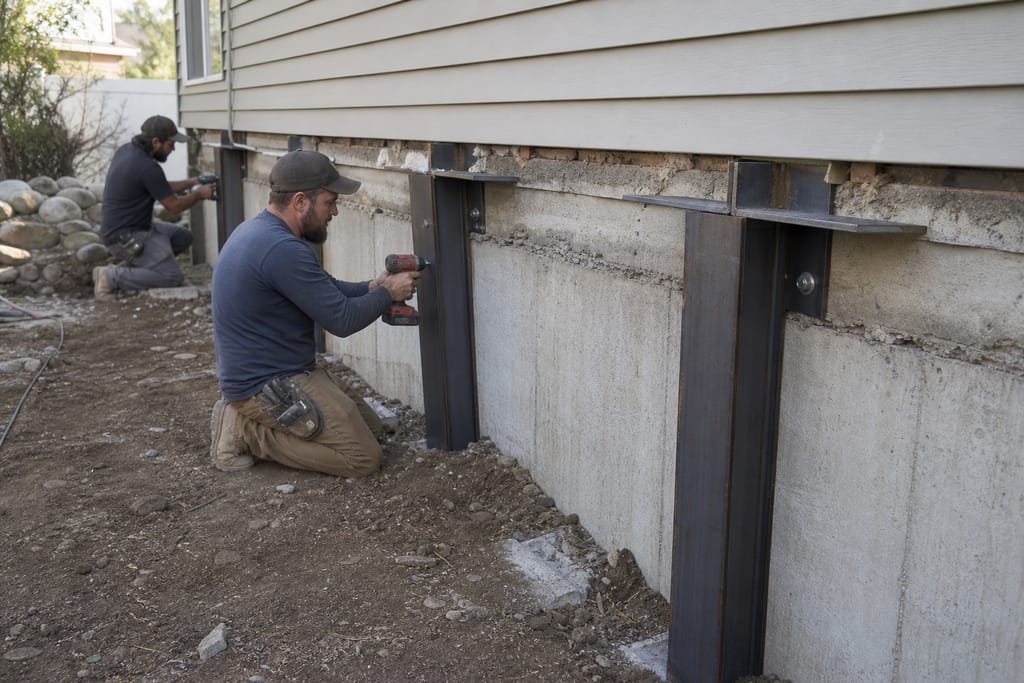
Steel I-Beams
braced floor-to-ceiling for walls with more advanced bowing that need rigid lateral support.
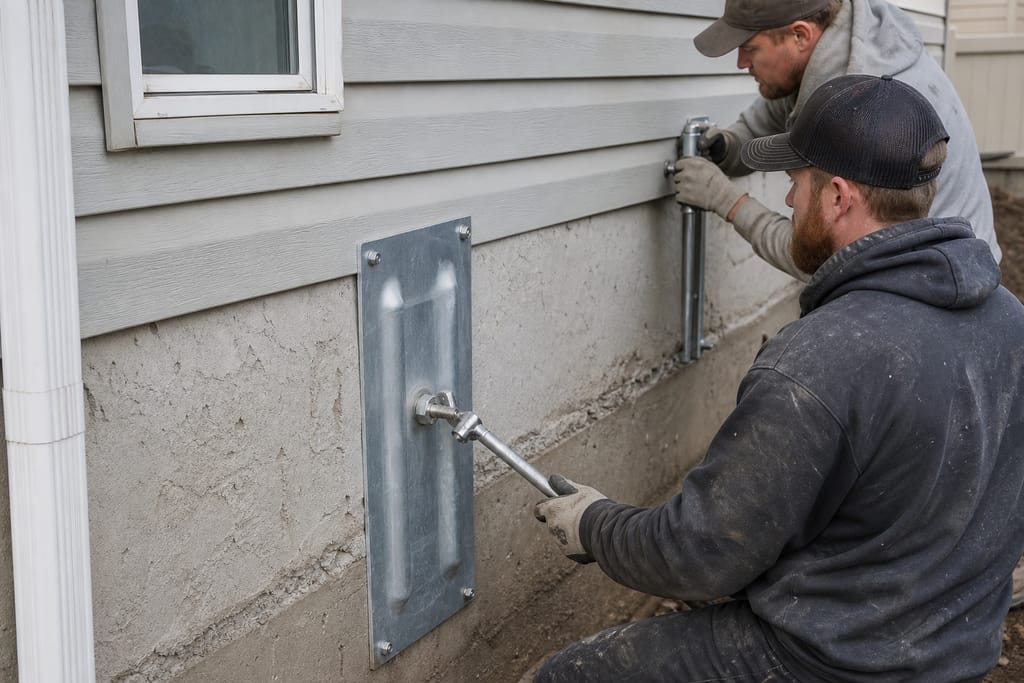
Wall Plates
spread anchor tension evenly across the wall instead of concentrating it at one point.
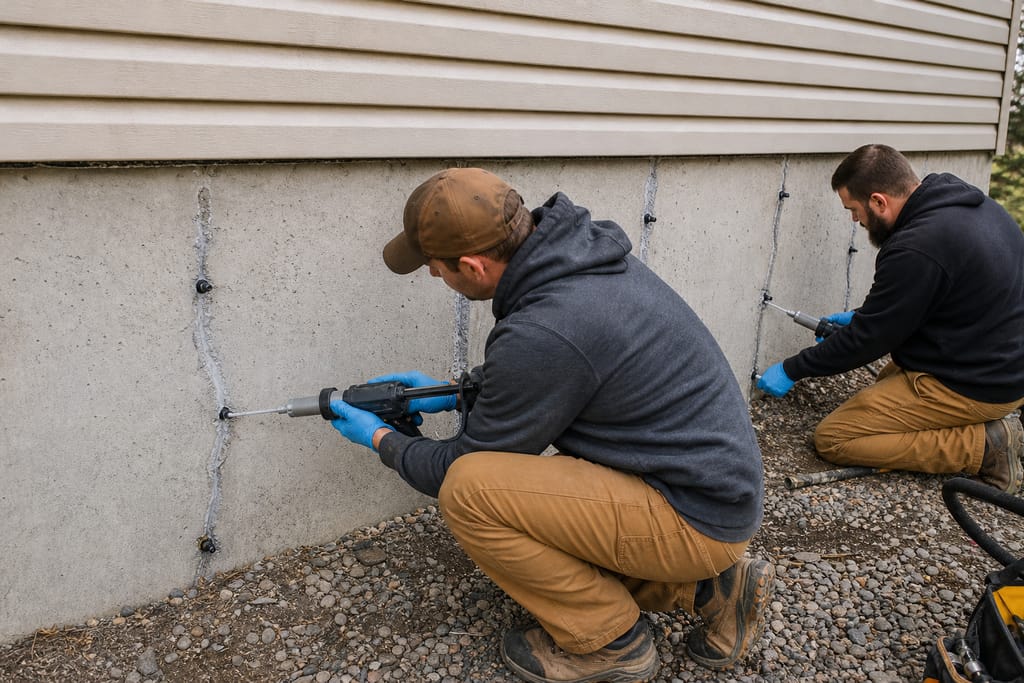
Epoxy Crack Filler
seals cracks ahead of reinforcement so moisture doesn't keep working behind the repair.
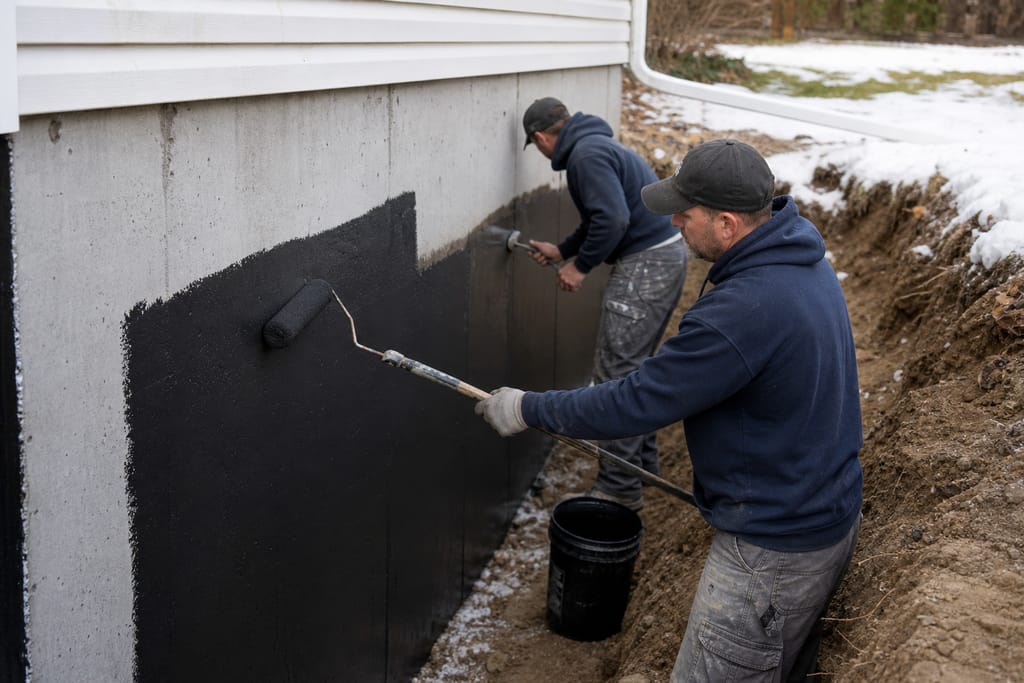
Moisture Barrier Coating
applied after stabilization to help the wall resist the seasonal moisture swings common on this bench grade.
Questions on materials?
Get a Free EstimateTimeline
How long does a Wall Stabilization take?
Most stabilization jobs are a one to two day install once the method is confirmed.
- 01
Consult and wall measurement
same day.
- 02
Method selection and estimate
1–2 days.
- 03
Anchor or strap installation
1 day.
- 04
Tensioning and final check
1 day.
Need a schedule that fits?
Get a Free EstimateBefore & after
Before and after Wall Stabilization
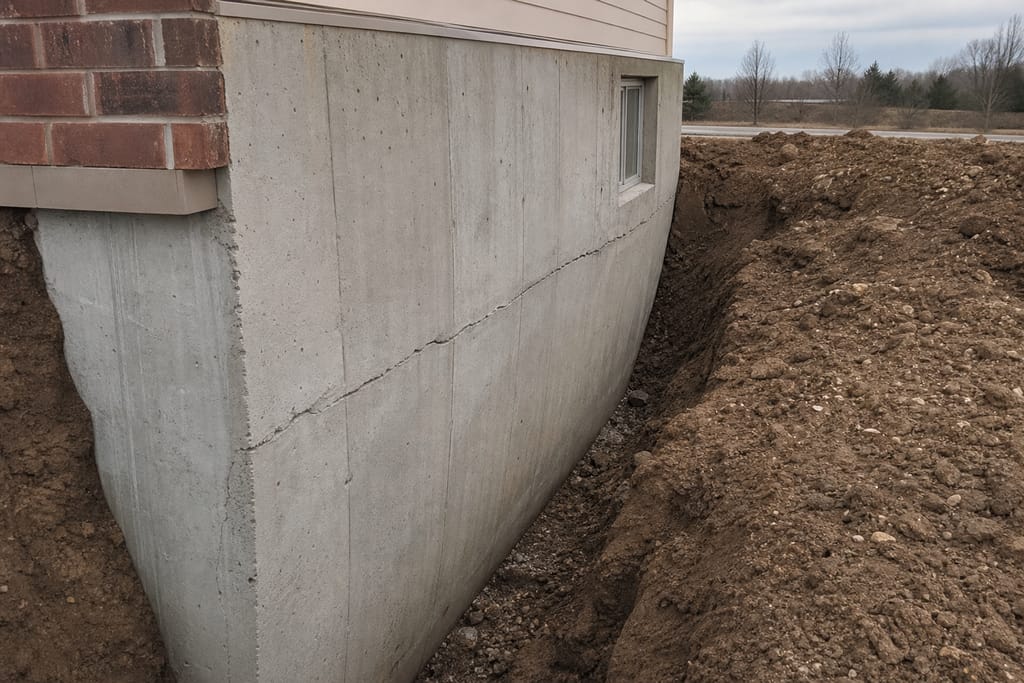
Before 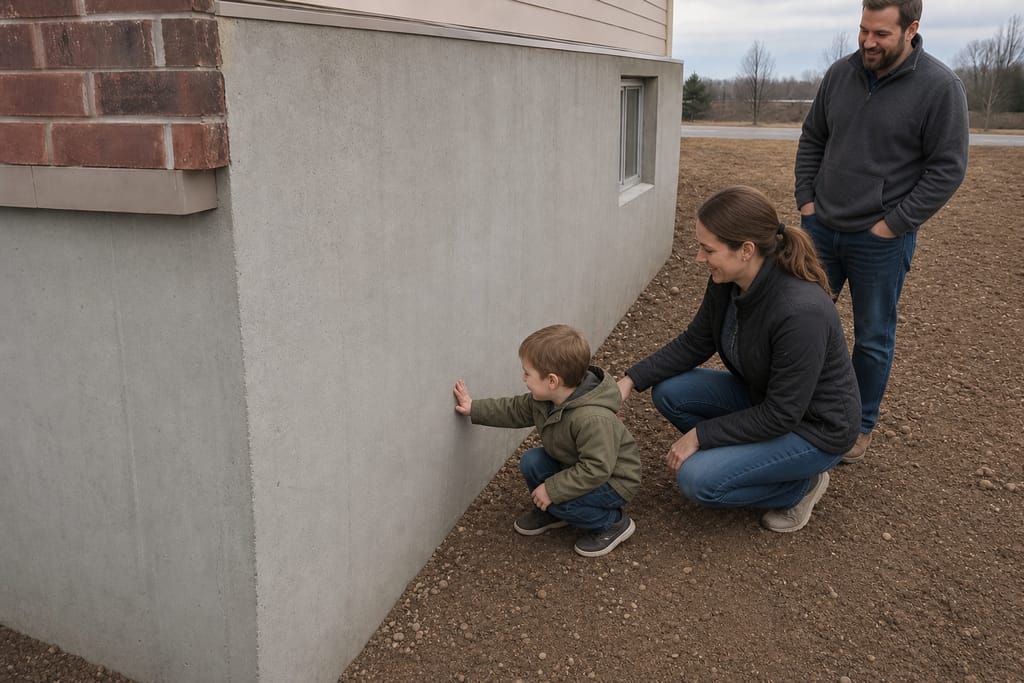
After
FAQs
Wall Stabilization FAQs
Is a diagonal crack in my basement wall normal settling or something structural?
A thin, stable diagonal crack can be cosmetic, but one that's widening, paired with a bow, or running near a corner usually signals structural movement worth a professional look.
Why does my basement wall bow after heavy snowmelt?
Snowmelt saturates the soil against the wall, raising hydrostatic pressure. If the wall doesn't have enough reinforcement or drainage relief, it pushes inward over time.
Can I fix a bowing wall myself?
Surface crack sealant is a DIY-safe step, but correcting an actual bow needs load calculations for anchor or strap placement, which isn't a safe guess to make yourself.
Do I need a permit for wall stabilization?
Often yes, since it's structural work affecting a load-bearing wall. We verify with the city before starting.
How much does wall stabilization cost?
Cost depends on wall length, bow severity, and the method chosen. A free estimate after inspection gives you a real number.
Will wall anchors need yard excavation?
Anchor systems need yard access to set the anchor plates; carbon fiber strapping is the interior-only alternative when yard access isn't available.
Next step
Get a Wall Stabilization estimate in Cottonwood Heights
Call Cottonwood Heights Foundation Pros at (435) 334-4917 or request a free estimate before the bow gets worse.
More services
Other Foundation Repair services
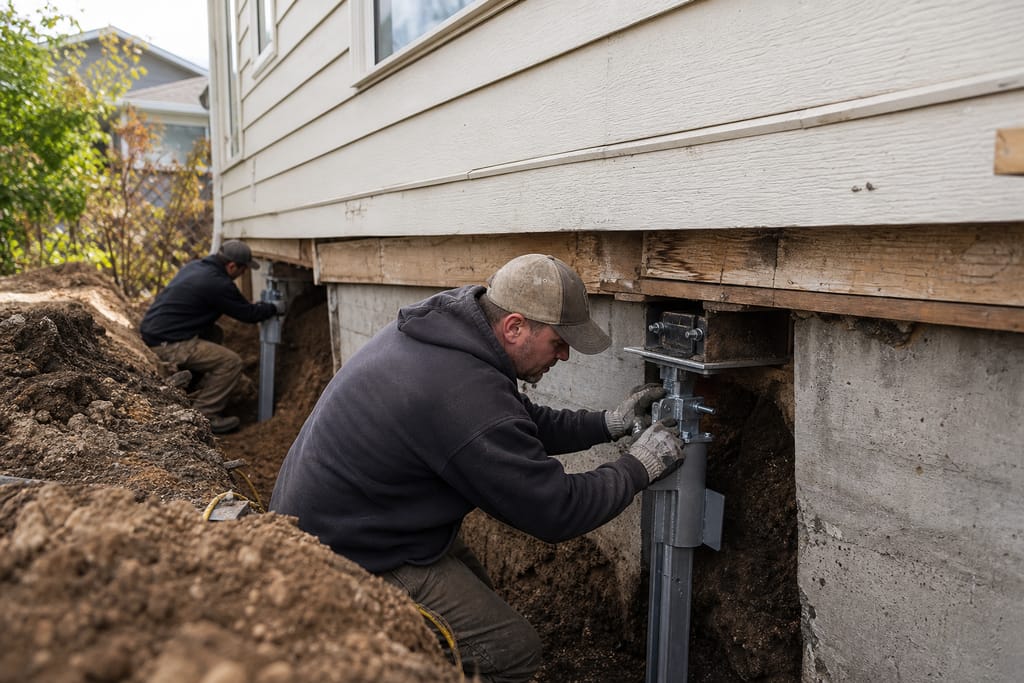
Foundation Repair
Foundation repair in Cottonwood Heights, UT: push piers, helical piers, and crack injection with free estimates.
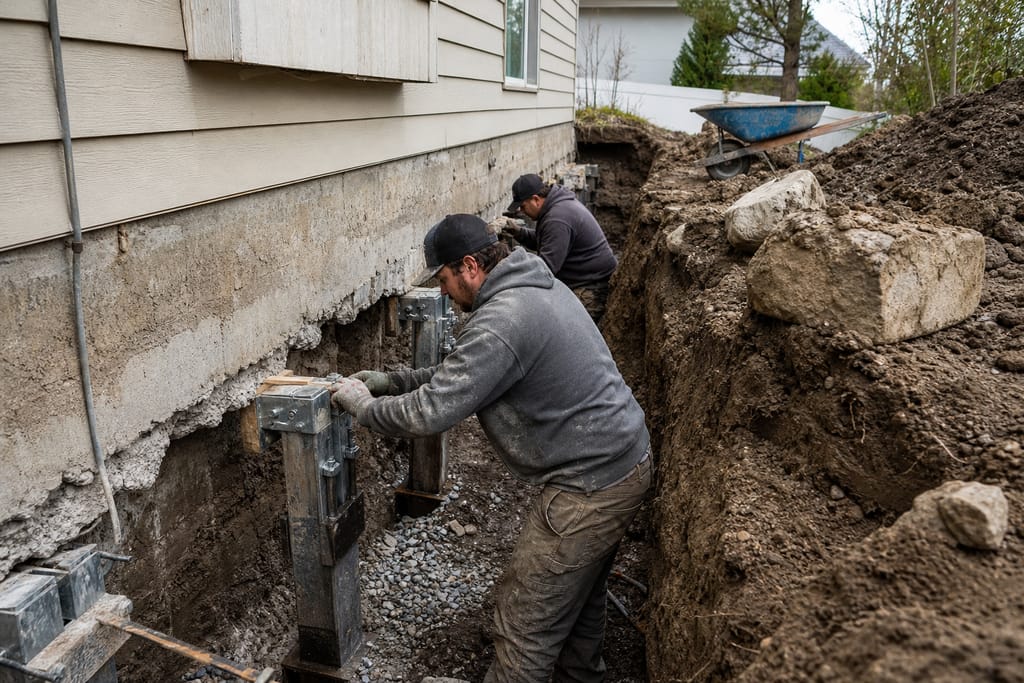
Piering and Underpinning
Push pier and helical pier underpinning in Cottonwood Heights, UT, for settling foundations on bench-grade clay and fill soil. Free estimates.
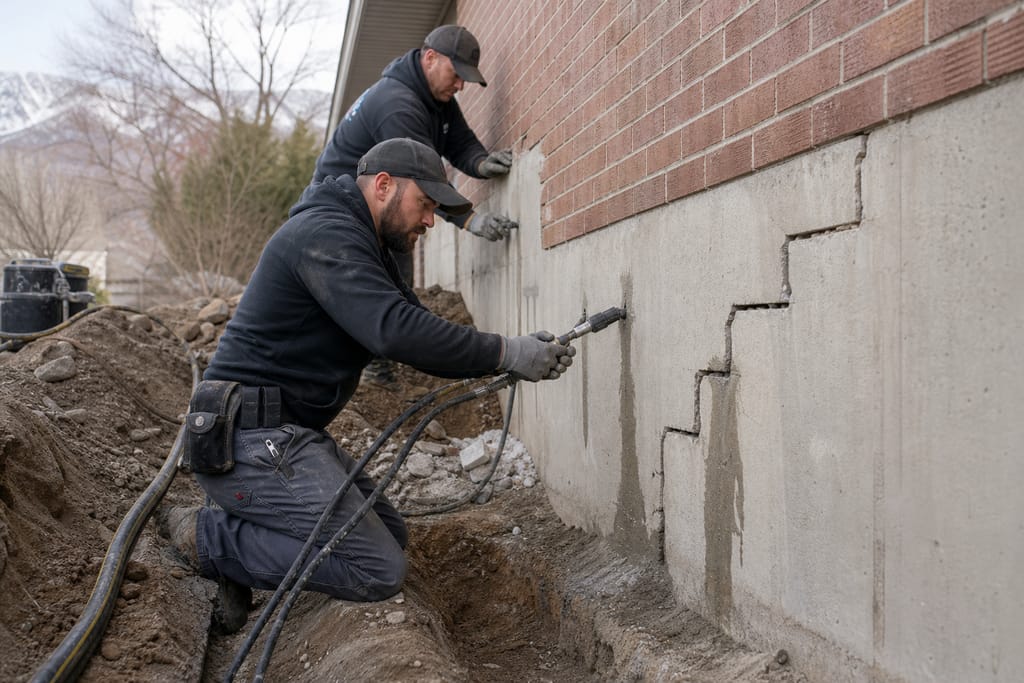
Foundation Crack Repair
Foundation crack repair in Cottonwood Heights, UT with epoxy and polyurethane injection. Fast turnaround, free estimates.
Ask about Wall Stabilization
Tell us about the project and how to reach you.