
Cottonwood Heights Foundation Pros
Piering and Underpinning in Cottonwood Heights, UT
Push pier and helical pier underpinning in Cottonwood Heights, UT, for settling foundations on bench-grade clay and fill soil. Free estimates.
- 15+ Years local experience
- 500+ Projects completed
- Licensed & Insured
Serving Cottonwood Heights and nearby communities.
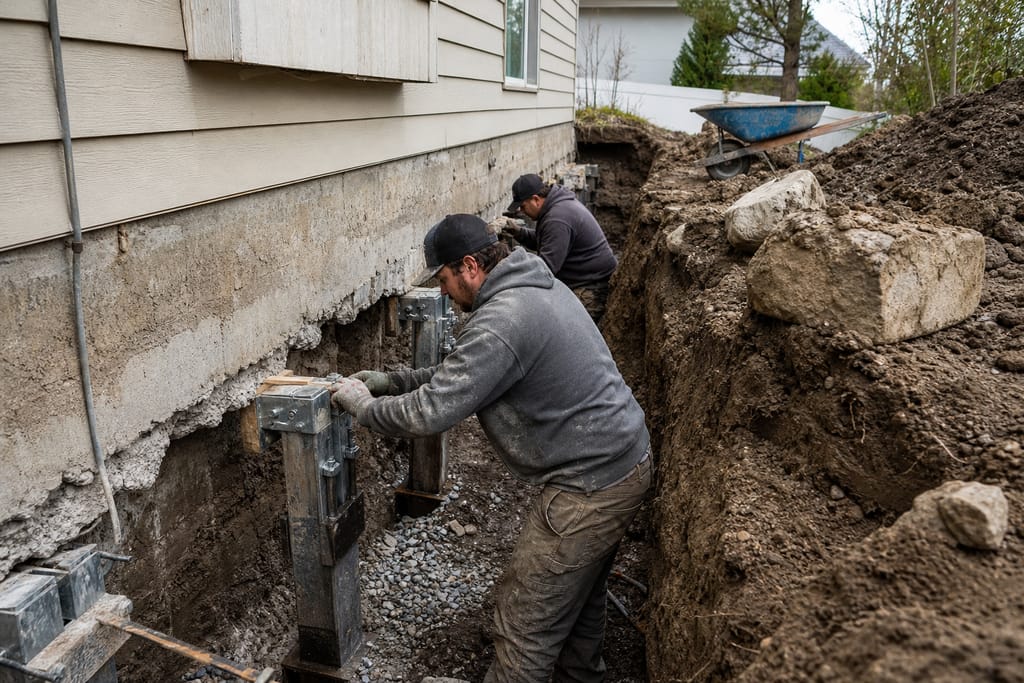
When a foundation drops because the soil beneath it can no longer hold the load, piering and underpinning gets steel support down to ground that won't move. Cottonwood Heights sits on bench-grade clay and sand that swells and shrinks with the seasons, and a lot of the housing stock here went up before the city's 2005 incorporation brought tighter code enforcement, so older footings are catching up to decades of soil movement now.
Cottonwood Heights Foundation Pros installs push piers and helical piers driven to load-bearing strata or bedrock, not just a few feet deeper into the same unstable fill.
What's included
What's included with Piering and Underpinning
Typically included: site excavation at each pier location, pier driving to refusal or design load, bracket attachment to the footing, and hydraulic lift to the achievable elevation. Optional: interior push piers for load-bearing walls, additional piers for corner or high-load sections, epoxy crack sealing on cracks exposed during excavation. Customer prep: clear a few feet of access around the foundation perimeter and move vehicles or storage away from dig zones before the crew arrives.
Want a clearer scope?
Get a Free EstimateHow it works
How our Piering and Underpinning process works
 Step 1
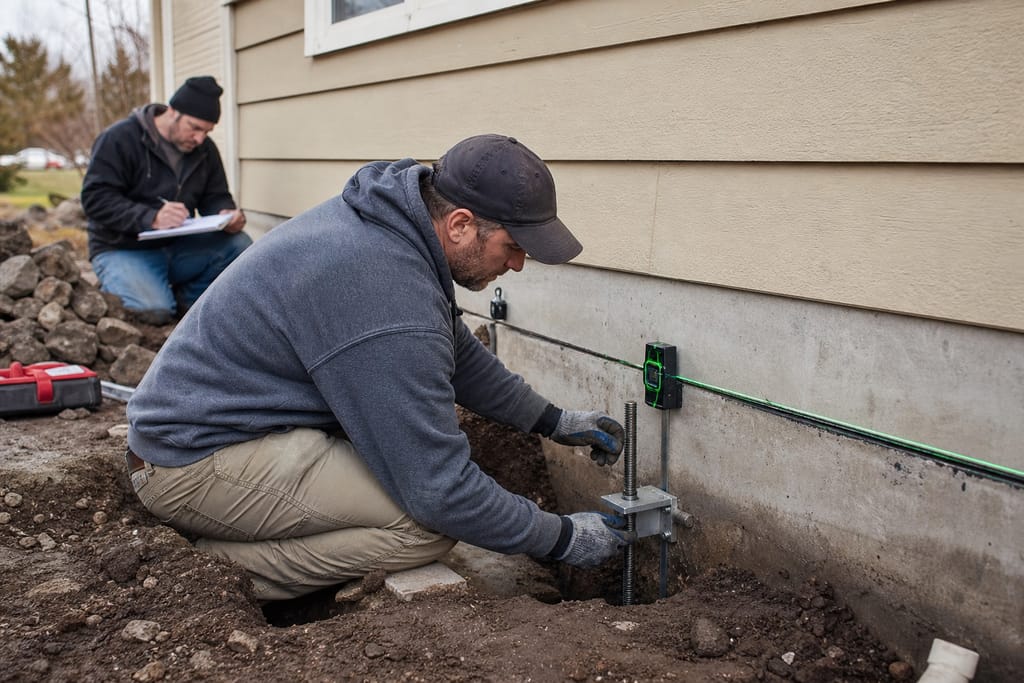
Load Assessment
Technicians calculate the structure's weight distribution to plan pier spacing.
 Step 2
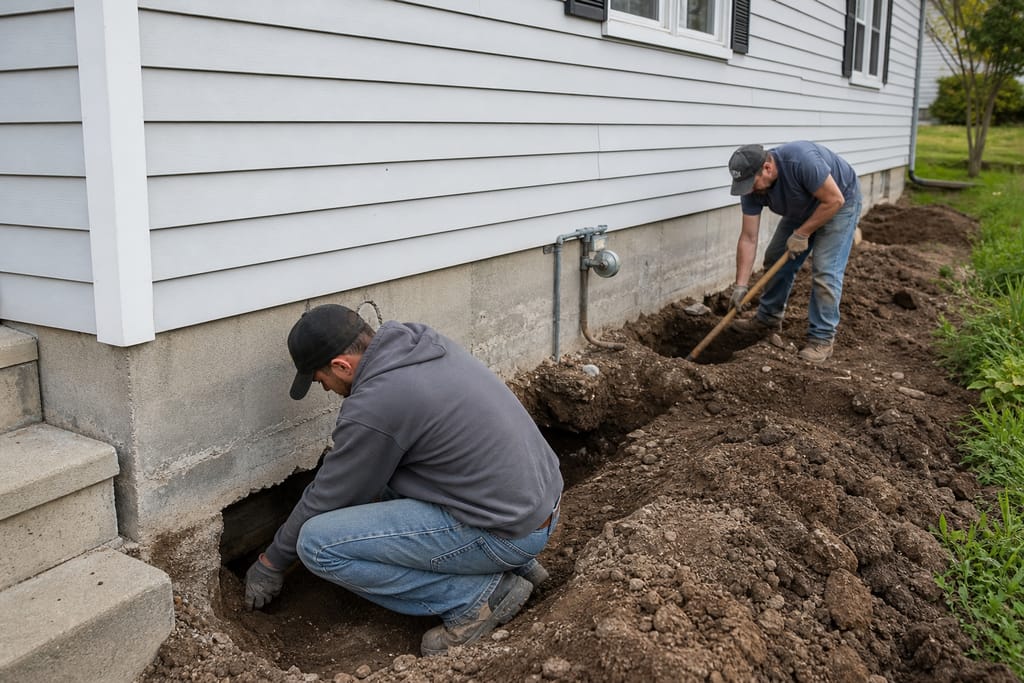
Access Excavation
Small excavation points open along the foundation at each pier location.
 Step 3
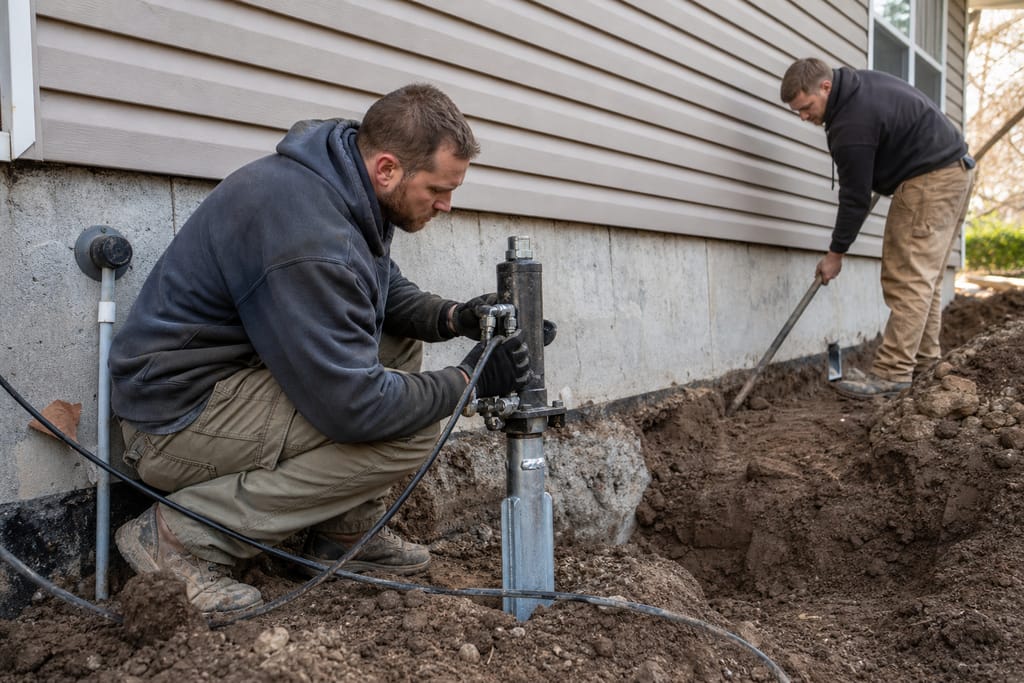
Pier Driving
Piers are driven or screwed in stages until they reach stable strata.
 Step 4
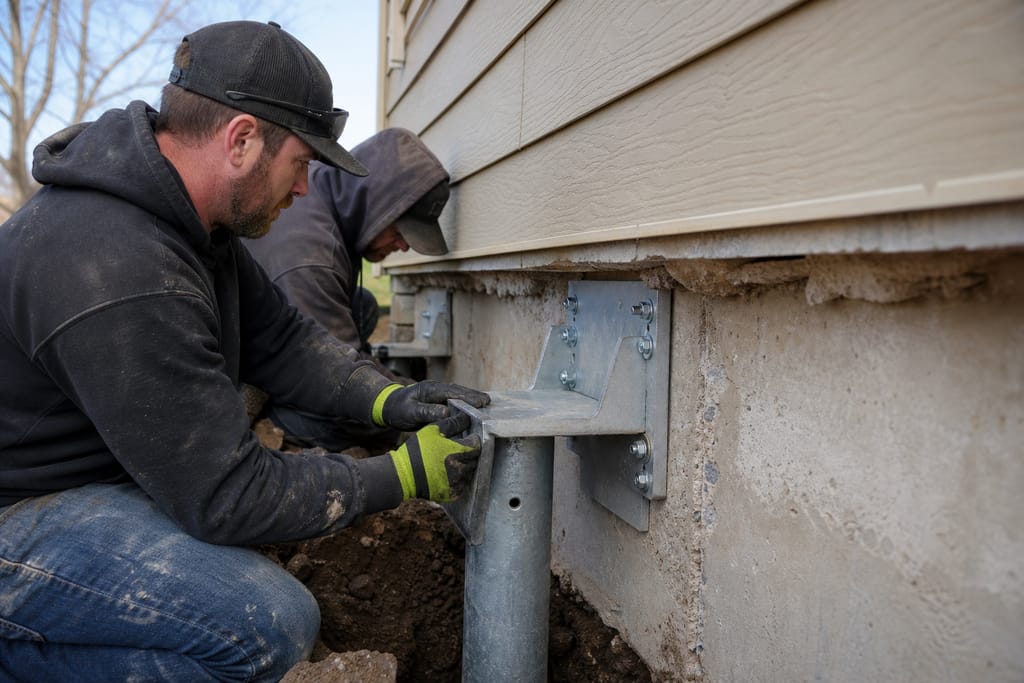
Load Transfer
Brackets connect each pier to the footing to redistribute structural weight.
 Step 5
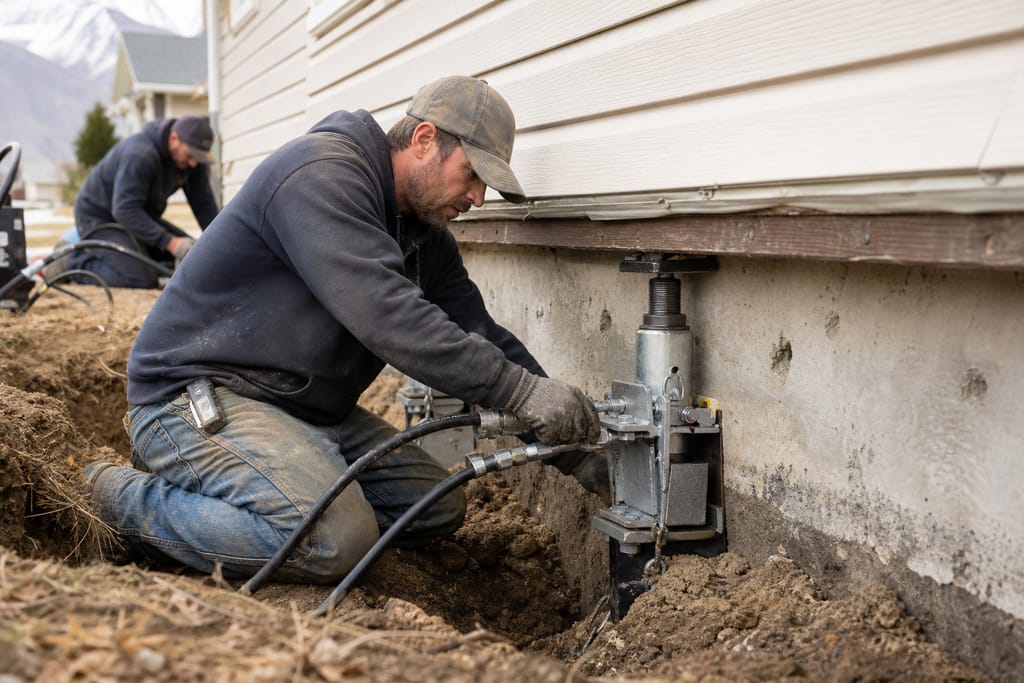
Leveling Adjustment
Hydraulic jacks raise the foundation toward its original position.
 Step 6
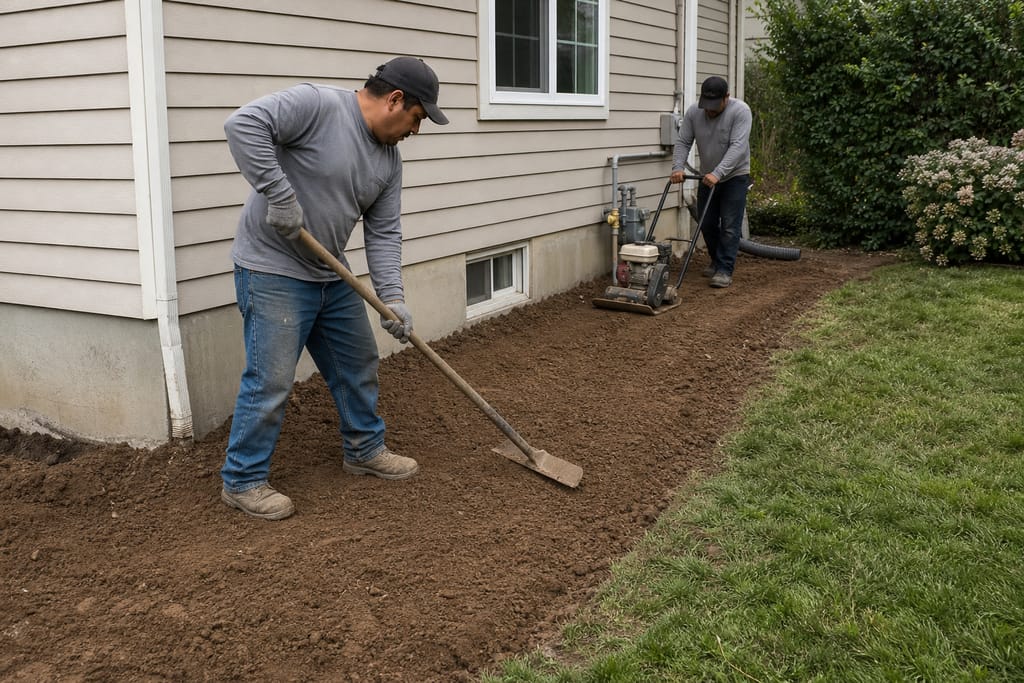
Site Restoration
Excavated soil is backfilled and compacted to match the yard grade.
Materials
Materials and methods for Piering and Underpinning
Pier selection comes down to soil depth and load, not guesswork. Here's what we draw from:
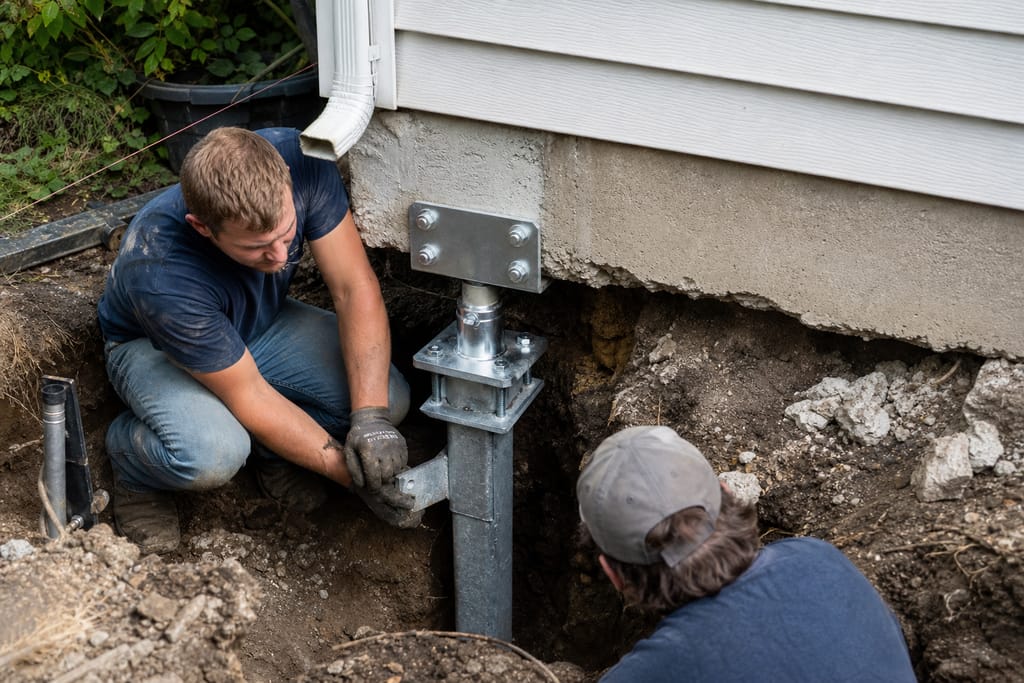
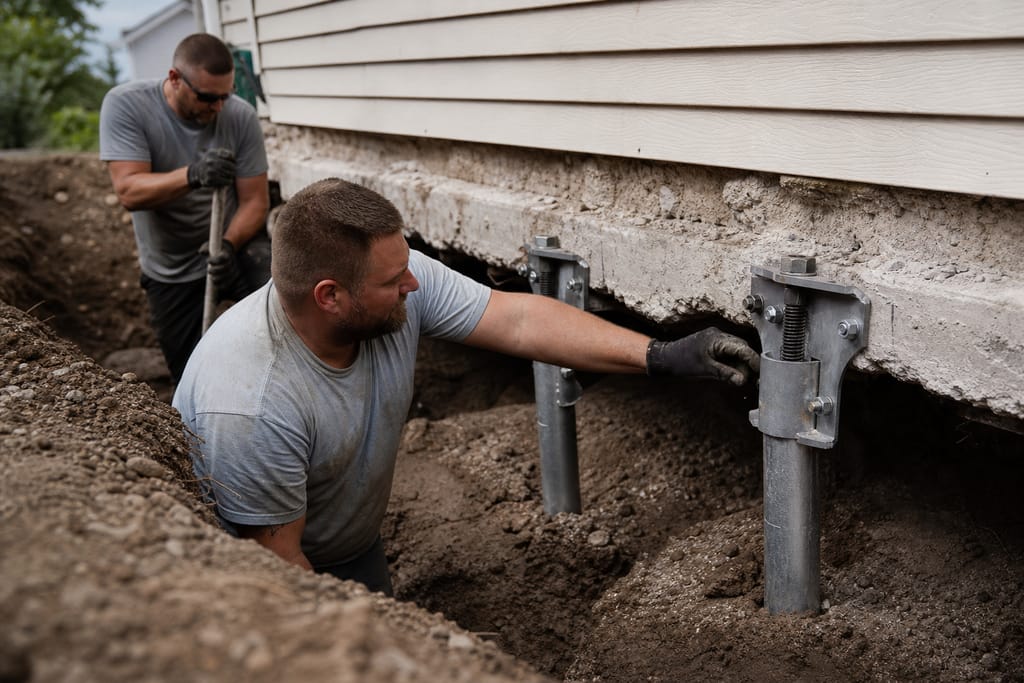
Steel Push Piers
driven hydraulically to bedrock or dense strata, the right call on heavier bench-area homes where surface soil alone won't hold the weight.
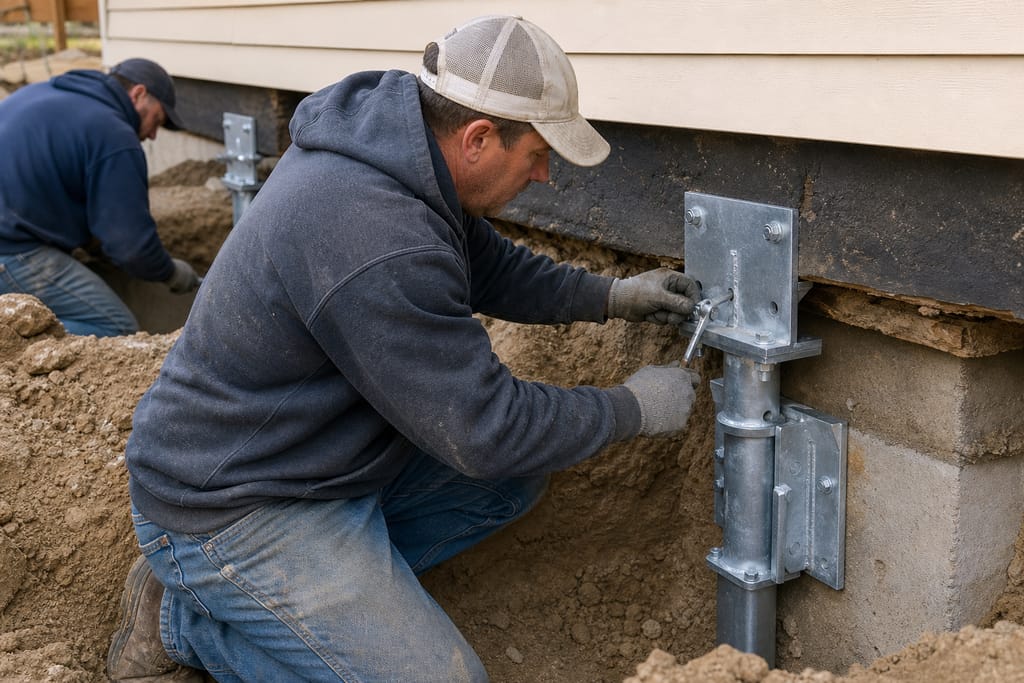
Helical Piers
screwed in with measurable torque, useful where lighter loads or tighter access make push piers impractical.
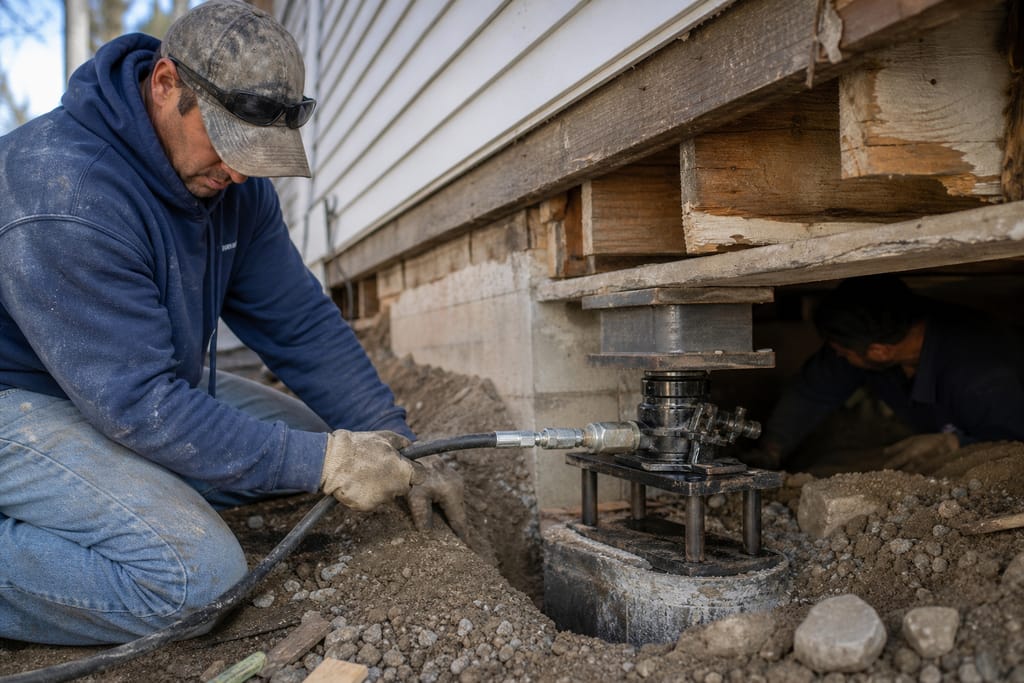
Underpinning Brackets
connect the pier to the existing footing so the load transfers cleanly instead of stressing the old concrete.
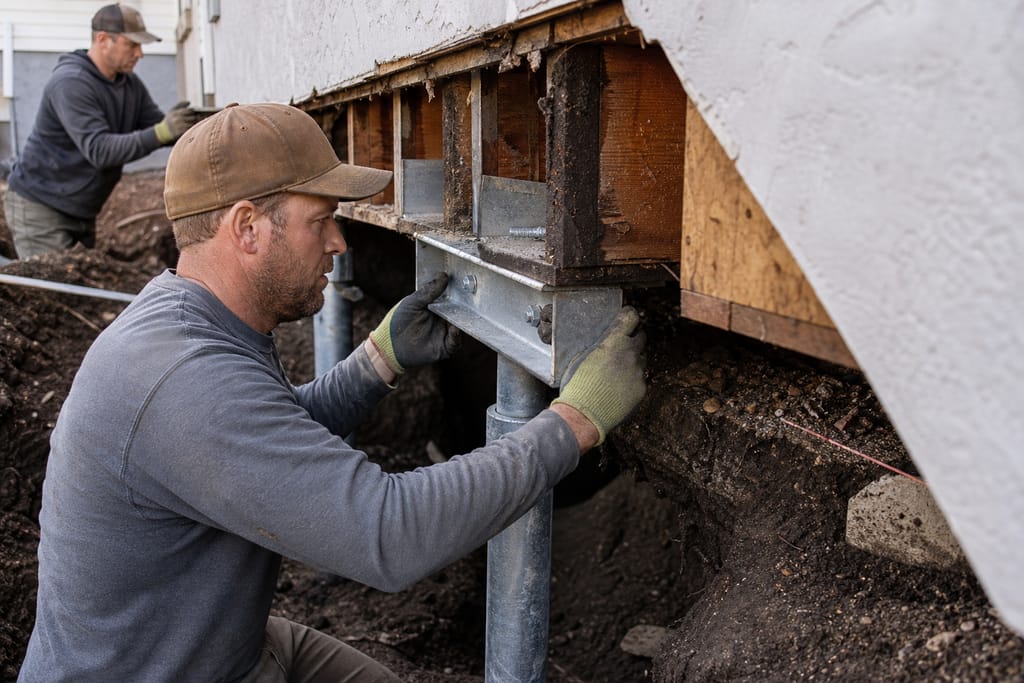
Hydraulic Lift Systems
let the crew raise a settled section in small, controlled increments instead of forcing it all at once.
Galvanized Coatings
protect the steel from the moisture swings that come with spring runoff soaking into bench soil.
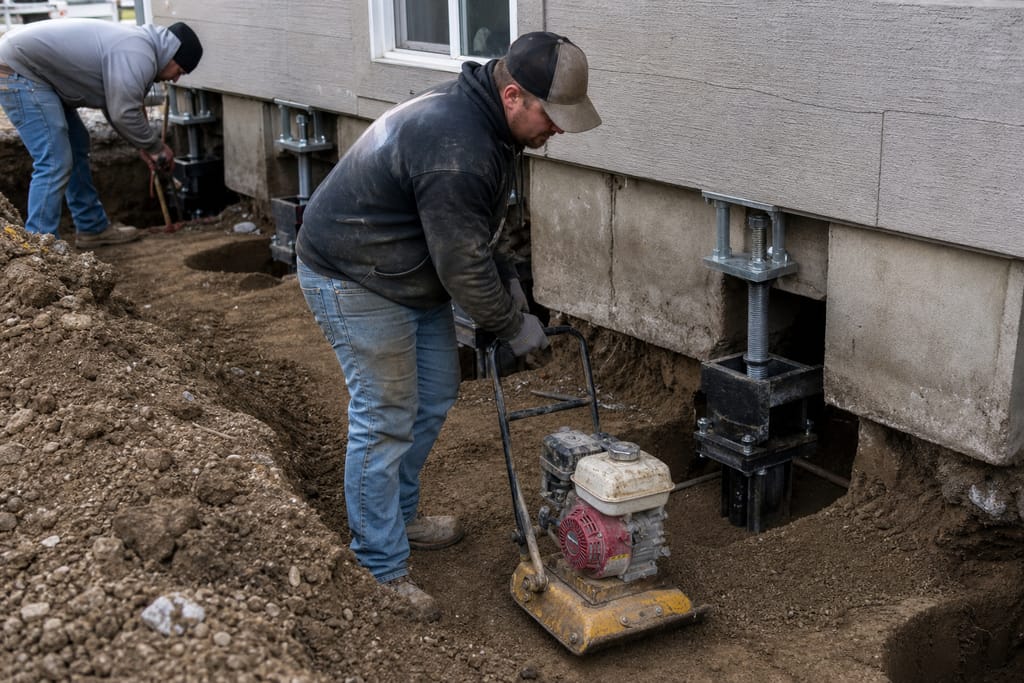
Compacted Fill Material
restores stable backfill around each pier so the surrounding soil doesn't undo the repair.
Questions on materials?
Get a Free EstimateTimeline
How long does a Piering and Underpinning take?
Most piering jobs run from a site visit to a finished yard inside two to three weeks, depending on pier count and access.
- 01
Consult and measurement
same day.
- 02
Engineering review (if required)
3–5 days.
- 03
Pier installation
1–3 days.
- 04
Backfill and grade restoration
1 day.
- 05
Follow-up elevation check
2–4 weeksafter install.
Need a schedule that fits?
Get a Free EstimateBefore & after
Before and after Piering and Underpinning
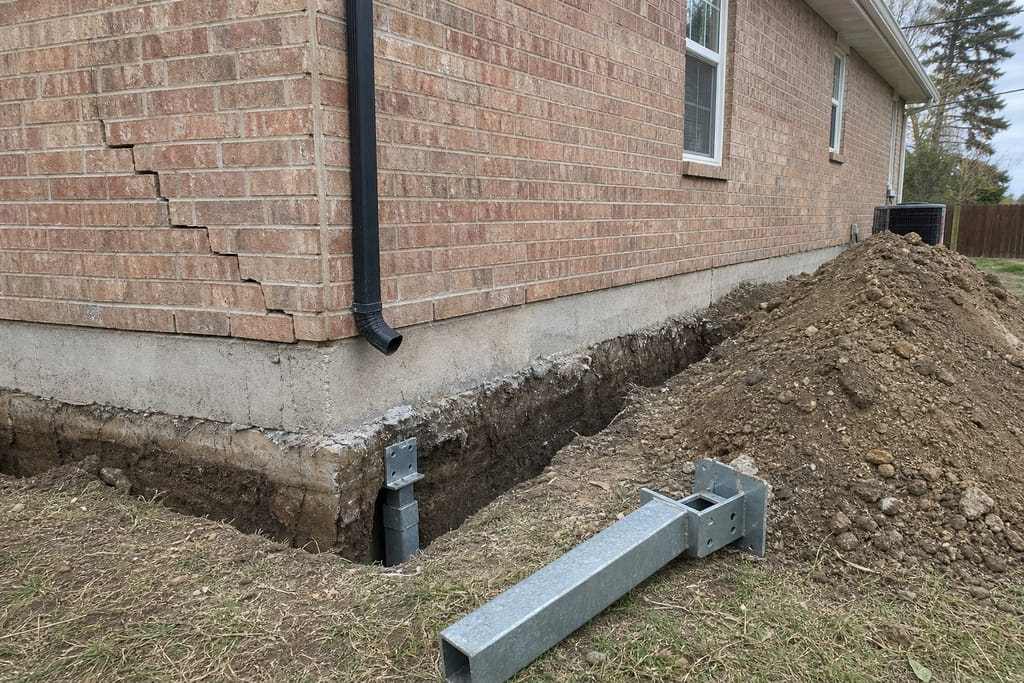
Before 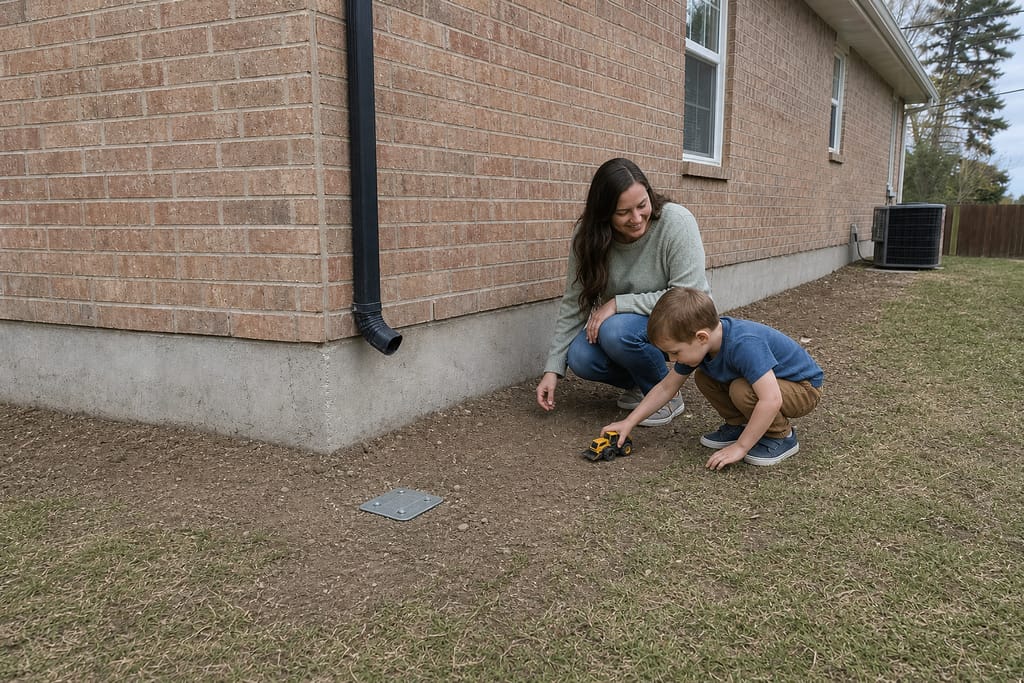
After
FAQs
Piering and Underpinning FAQs
How do I know if I need push piers or helical piers?
Push piers work well on heavier structures where soil is deep enough to reach bedrock; helical piers suit lighter loads or additions where torque can confirm capacity without driving as deep. We base the call on your home's weight and the soil at your site, not a default choice.
How much does piering cost?
Pricing depends on pier count, depth to stable soil, and access around the foundation. A free estimate after a site visit gives you a number tied to your actual repair, not a flat per-pier rate.
Will piering stop my doors and windows from sticking?
Once the foundation is lifted and stabilized, the frame distortion causing stuck doors and windows usually eases, though some interior finish work may still be needed afterward.
Do I need a permit for pier installation?
Structural work like underpinning usually needs a permit in Salt Lake County. We handle that filing as part of the process.
How long do piers last?
Steel push piers and helical piers are designed to transfer load permanently once set to bearing strata; they're not a temporary fix like mudjacking under a slab.
Can piering be done without digging up my whole yard?
Yes. Excavation is limited to each pier location, not the full foundation perimeter.
Next step
Get a Piering and Underpinning estimate in Cottonwood Heights
Call Cottonwood Heights Foundation Pros at (435) 334-4917 or request a free estimate to get a pier plan specific to your foundation.
More services
Other Foundation Repair services
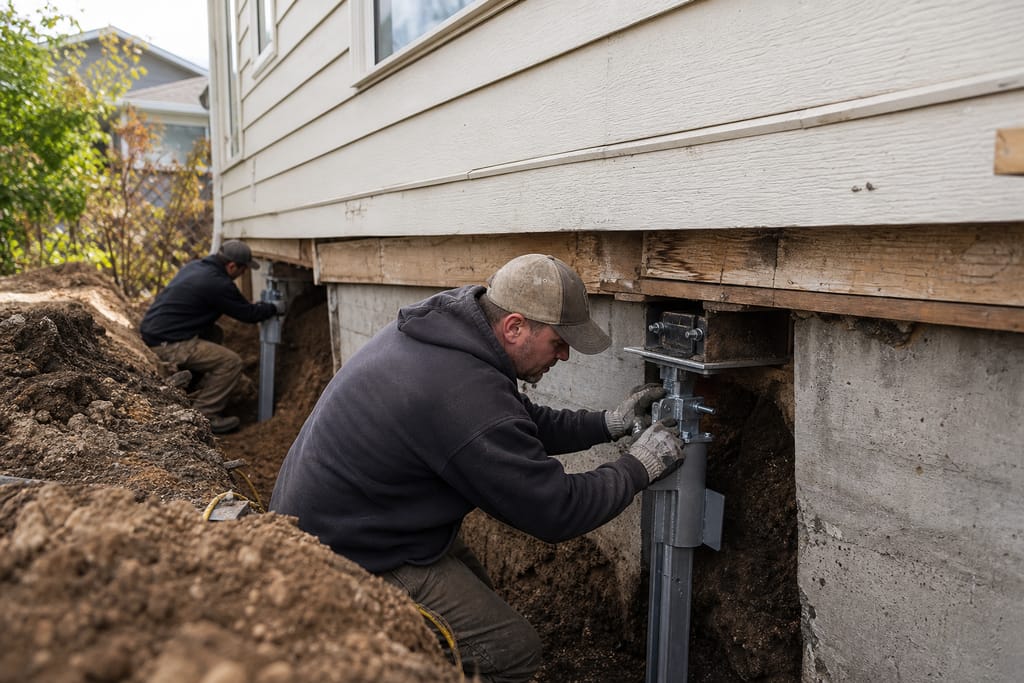
Foundation Repair
Foundation repair in Cottonwood Heights, UT: push piers, helical piers, and crack injection with free estimates.
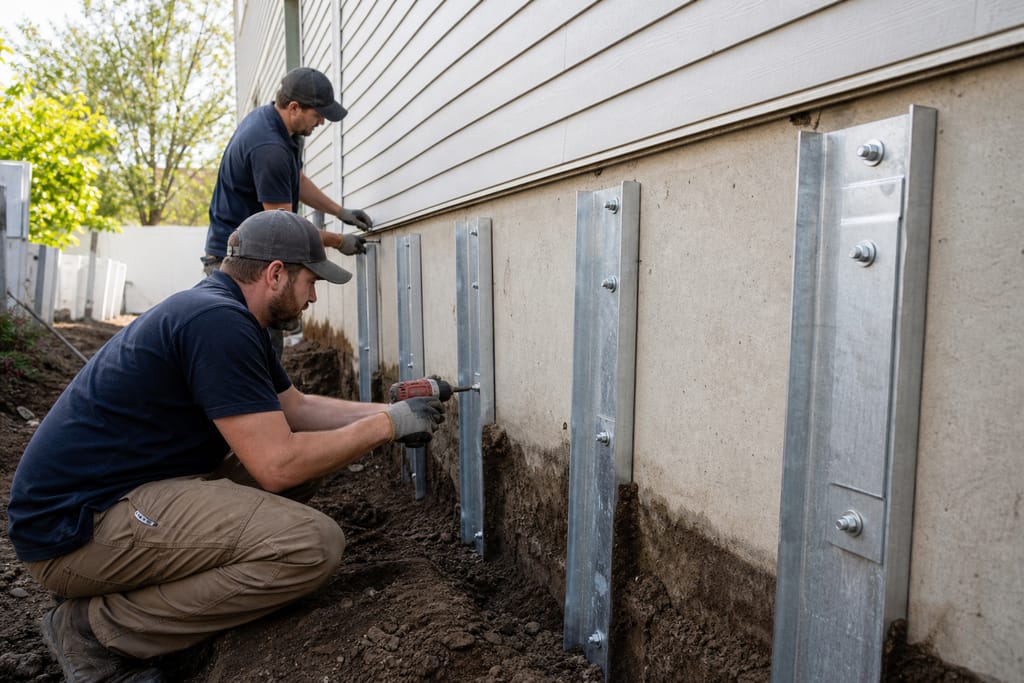
Wall Stabilization
Bowing basement wall stabilization in Cottonwood Heights, UT using wall anchors and carbon fiber straps. Free estimates, written scope.
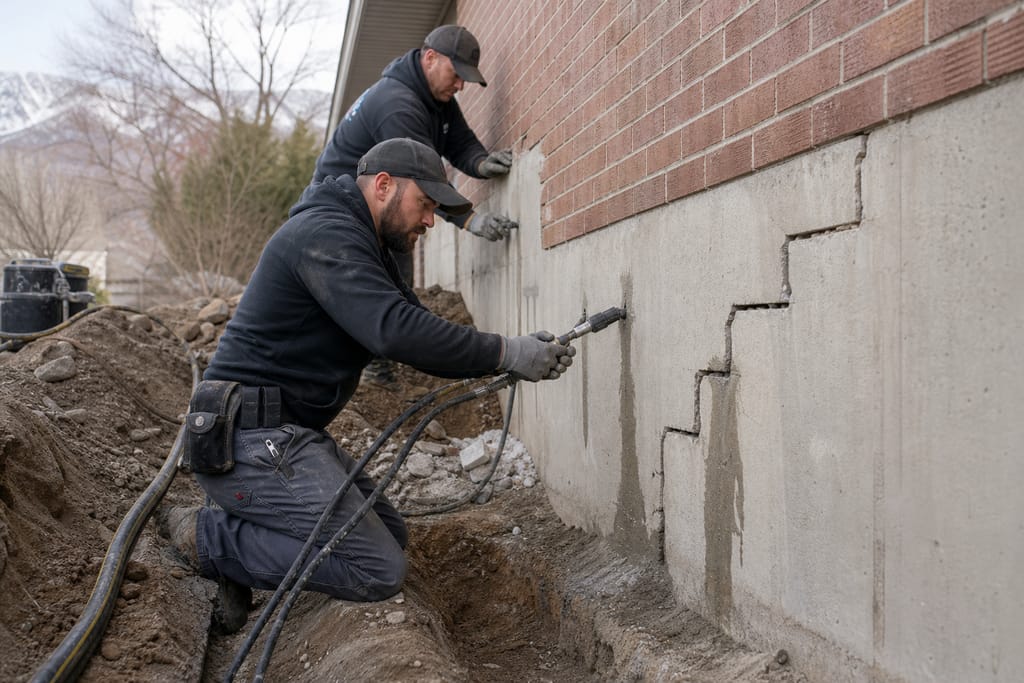
Foundation Crack Repair
Foundation crack repair in Cottonwood Heights, UT with epoxy and polyurethane injection. Fast turnaround, free estimates.
Ask about Piering and Underpinning
Tell us about the project and how to reach you.